
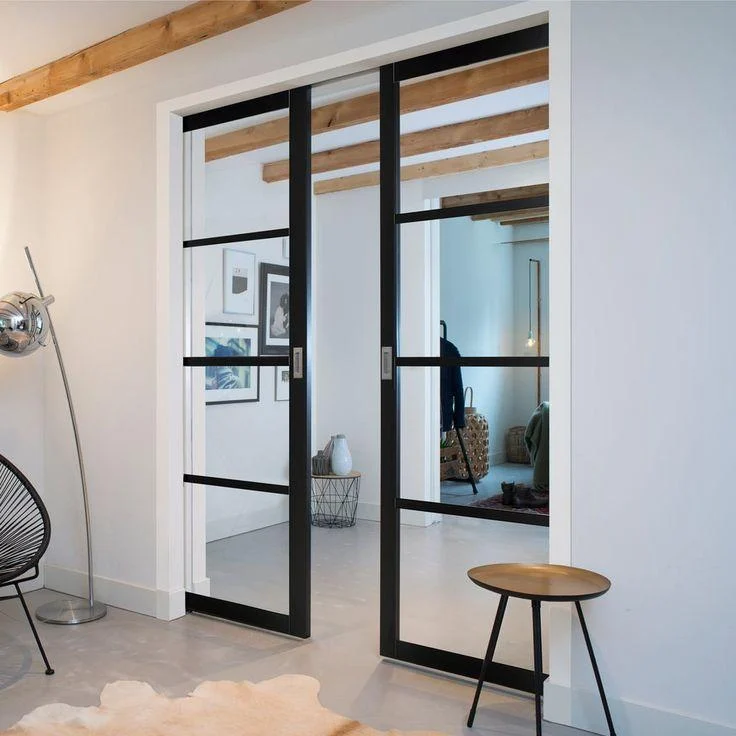
In Dubai, “invisible door”, “hidden door” and “concealed door” usually describe the same product: a door hung in a concealed aluminium frame so it sits flush with the wall, with no architrave and no visible hinges. The real differences are in the finish, the hardware and the wall it goes into, which is what this guide covers.
Are invisible, hidden and concealed doors the same thing?
Mostly, yes. Suppliers use the three names interchangeably for a flush door on a concealed frame. If you want to be precise:
- Concealed door describes the frame: it is built into the wall so you don’t see it.
- Invisible or flush door describes the finish: the door leaf is painted, papered or panelled to match the wall, so the door all but disappears.
- Hidden door is the broadest term. It covers flush doors, but people also use it for “secret” doors disguised as bookcases or wall panelling, which are a different, bespoke joinery product.
You may also see the British term jib door, which means the same thing as an invisible door. When you ask for quotes, describe what you want to see when the door is closed, not just the name, and you will get comparable prices.
How does a concealed door frame work?
A concealed door frame is an aluminium profile fixed into the wall opening before the wall is finished. The plaster, board or panelling then runs right up to the edge of the frame, so once the door is hung all you see is the door leaf and a fine, even gap around it. The hinges sit inside the frame and the edge of the leaf, so nothing shows when the door is closed.
Most flush systems are flush on one side of the wall, usually the side the door pushes open from. The other side shows a slim frame line or a slightly recessed leaf. Check which side you want to look seamless before you order, because it decides which way the door must open.
Which walls can take an invisible door?
Concealed frames are most commonly fitted in drylining and plasterboard walls, and they can be adapted to other wall constructions once the opening has been inspected. The best time to plan an invisible door is during fit-out, before walls are finished, because the frame has to be set before the final skim or board goes on.
Fitting one into an existing, finished wall is still possible, but it usually means cutting back the surrounding finish, setting the frame and making good, then redecorating. SmartFix checks the wall construction and the opening on site before confirming which system will work. You can see the options we install on our concealed and invisible doors page.
Swing, pivot or sliding: which concealed door should you choose?
- Flush swing doors open like a normal door on hidden hinges. They are the simplest option for en-suites, storage rooms and offices.
- Flush pivot doors turn on a pivot set into the floor and head instead of side hinges, so they can carry a taller, wider leaf. They suit walk-in wardrobes, studies and statement openings. See our pivot doors for more.
- Concealed sliding doors slide into or along the wall on a hidden track, which saves swing space in tighter rooms. Automatic versions are available for premium interiors.
- Concealed service and access doors hide utility rooms, staff corridors and plant cupboards in hotels, restaurants and offices.
How do you open a door with no visible handle?
Because a handle would give the door away, invisible doors normally use one of these:
- Push-catch or touch-latch: press the door and it springs open. Good for wardrobes and cupboards you open now and then.
- Magnetic latch: quiet and positive closing, often paired with a recessed pull.
- Recessed or flush pull handle: the most practical choice for rooms you use many times a day, such as a bathroom or office.
If the door will be used by children or older family members, choose a recessed pull over push-to-open. It is easier to grip and harder to slam.
Where do concealed doors work best in Dubai homes and offices?
Concealed doors are at their best wherever a wall should look clean and uninterrupted: en-suite bathrooms off master bedrooms, storage and utility rooms off living areas, home cinemas, meeting rooms, private offices and staff-access points in hotels, spas, restaurants and showrooms.
For bathrooms and laundry rooms, ask for a door leaf and finish suited to humidity, since bathrooms in Dubai villas stay warm and steamy. For hotel and office corridors, think about durability and how often the door will be opened, as this decides the hinge and latch you need.
What affects the cost of a concealed door in Dubai?
There is no single price, because each door is made to the opening. The main things that change the cost are:
- Door height and width, especially floor-to-ceiling leaves
- The frame system and whether it is flush on one or both sides
- The leaf finish: primed for painting, panelled, veneered or glass
- Swing, pivot or sliding operation, and the hinges or pivots required
- Handle or latch type
- Whether the wall is new or the door is being retrofitted into a finished wall
SmartFix gives a quotation after measuring the opening. Request a site visit for an accurate figure.
What to ask before you order an invisible door
- Which side of the wall will be flush, and which way will the door open?
- What is the wall made of, and is it finished yet?
- What handle or latch will the door use?
- How will the leaf be finished to match the wall, and who does the decorating?
- What adjustment or after-sales support is included once the door is installed?
About this guide
This guide was written by the SmartFix Doors and Windows team, who supply, install and service aluminium, glass and automatic door systems across Dubai from our workshop in Al Quoz. If you would like advice on a specific opening, book a site visit or message us on WhatsApp.
Frequently asked questions
Is an invisible door the same as a flush door?
Yes. An invisible door and a flush door both sit level with the surrounding wall on a concealed frame, with no architrave. “Invisible” usually means the leaf is also painted, papered or panelled to match the wall, so the door is very hard to spot when closed.
Can a concealed door be installed in an existing wall?
Usually, yes. The surrounding wall finish is cut back, the concealed frame is set into the opening, and the wall is made good and redecorated. It is simpler and cleaner to plan a concealed door before the wall is finished, but retrofits in Dubai villas and apartments are common.
Are invisible doors suitable for bathrooms?
Yes, and en-suites are one of the most popular places for them. Choose a door leaf and finish that suit humid rooms, and make sure the extractor fan keeps steam under control. A recessed pull is often more practical than push-to-open for a bathroom door.
Can a hidden door go floor to ceiling?
Yes. Full-height leaves are a popular choice because they remove the band of wall above a normal door and make the room feel taller. The maximum height depends on the frame system and the hinges or pivots, which is confirmed after measuring the opening.
Does SmartFix install concealed doors across Dubai?
Yes. SmartFix fabricates, supplies and installs concealed, hidden and invisible doors across Dubai, including Palm Jumeirah, Jumeirah, Dubai Hills, Arabian Ranches, Business Bay, Downtown Dubai, DIFC and Dubai Marina. Send your location and opening size on WhatsApp to arrange a visit.
Planning an Invisible or Hidden Door? Tell us about the wall and the opening, and SmartFix will recommend the right concealed door system and quote after a site visit. Book a site visit or message us on WhatsApp.